

Best Things to Do in Marrakesh: A Complete Guide to Morocco’s Most Enchanting City
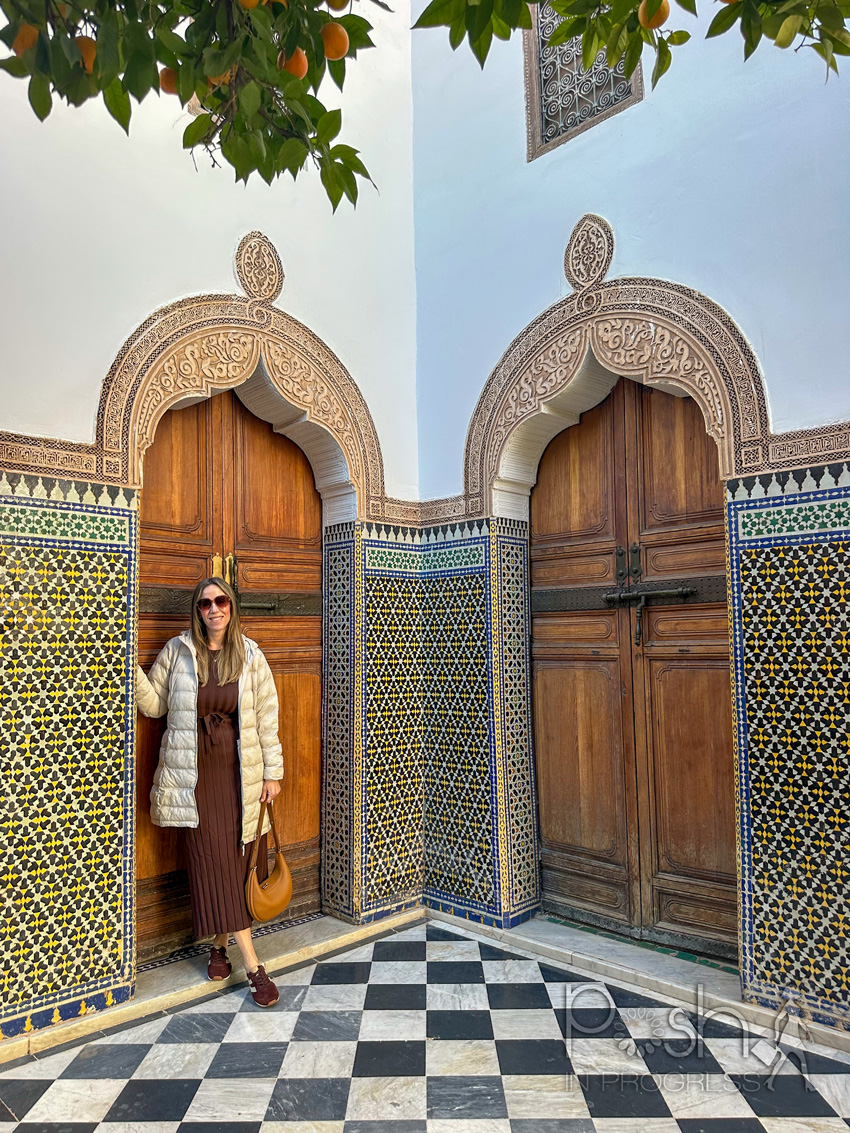
Over Thanksgiving break, a friend and I decided to take a last-minute trip to Marrakesh on a whim just three weeks later. We booked our flight to Marrakesh without overplanning and trusted that the experience itself would guide us. One of my blogger friends had recently traveled to Marrakesh with her family, so I asked her for her advice on a local tour guide and driver. The trip had a few bumps, but with only three weeks advanced planning, it turned out great. It also reinforces why spontaneous travel can be so rewarding.
Marrakesh is vibrant, intense, and layered. It is visually stunning with amazing tile work, cool doors, and gorgeous architecture. But it also is emotionally stimulating, especially if you are sensitive to crowds or noise. While some moments felt overwhelming, the trip itself was absolutely worthwhile. The highlights for me were, without question, the sunrise hot air balloon ride and our full day in the Agafay Desert riding camels and ATVs. Those experiences alone made the journey unforgettable and are what I think back on most when I reflect on the trip. If you are planning a visit and want a realistic, experience-based guide, these are the best things to do in Marrakesh based on what we actually did.
Exploring the Medina and Souks
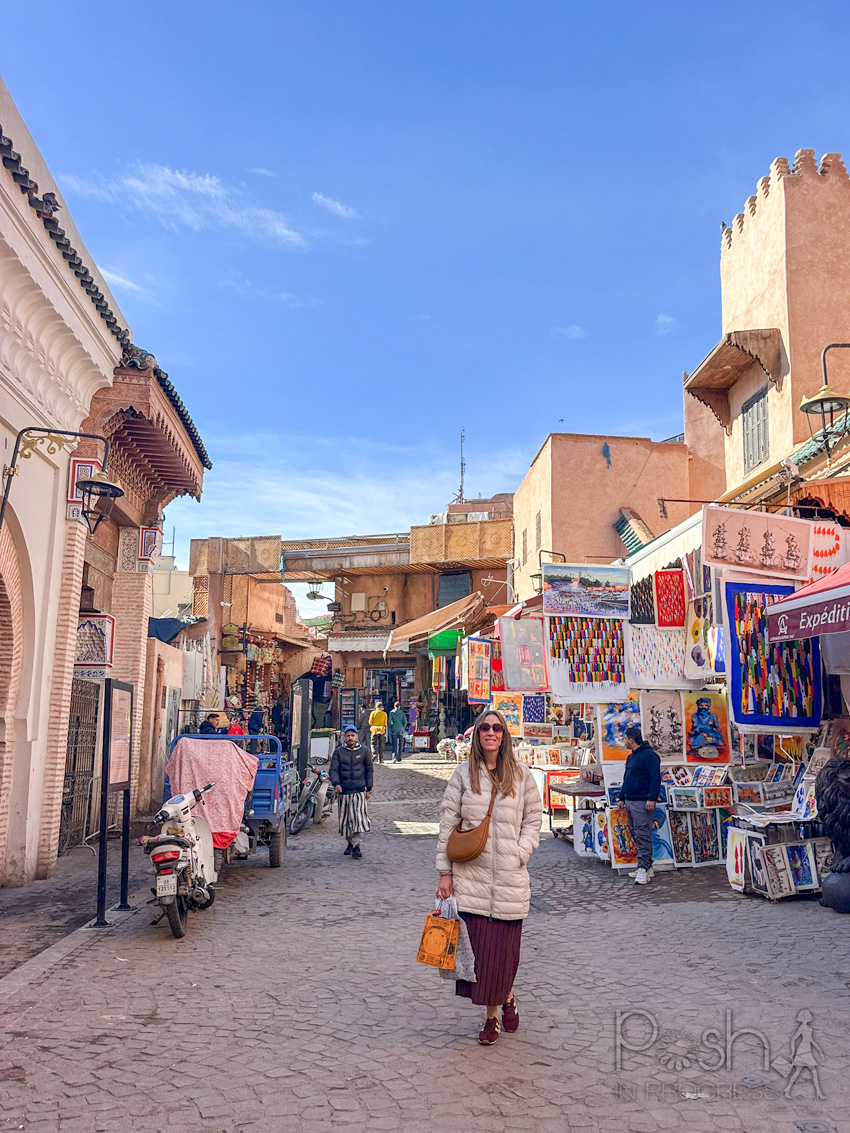
The medina is the historic core of Marrakesh and the area most people associate with the city. Entering the medina feels like stepping into another world. The streets narrow quickly, motorbikes weave past pedestrians, and shops spill out into the alleyways. Every sense is activated at once.
The souks are organized by trade, which becomes more apparent the longer you spend there. You will find entire sections dedicated to spices, leather goods, metalwork, lanterns, rugs, pottery, and textiles. Much of what you see is handmade, and watching artisans at work adds depth to the experience. This is where Marrakesh’s history and craftsmanship are most visible.
That said, I personally found the medina overwhelming after a short amount of time. The tight passageways, constant movement, and sheer volume of people can feel intense, especially if you are prone to claustrophobia (which I am). I felt the anxiety rising in my body as we walked in the alleyways. The anxiety rose and I honestly felt trapped after awhile. I am very glad I experienced it, but I enjoyed it most in short, intentional visits rather than wandering for hours at a time.
If this is your first time in Marrakesh, hiring a guide for at least one visit to the medina can make a big difference. A guide helps you navigate with confidence and provides context that makes the experience more meaningful and far less stressful. I was also able to ask him to take us out when I reached my point of overwhelm. If I were there alone, I think it would have been quite challenging to make a quick exit. I’m also very glad we didn’t choose a riad in the medina (which someone suggested I do) because I know I would not have liked staying in the medina for the majority of the trip.
Experiencing Jemaa el-Fnaa at Sunset
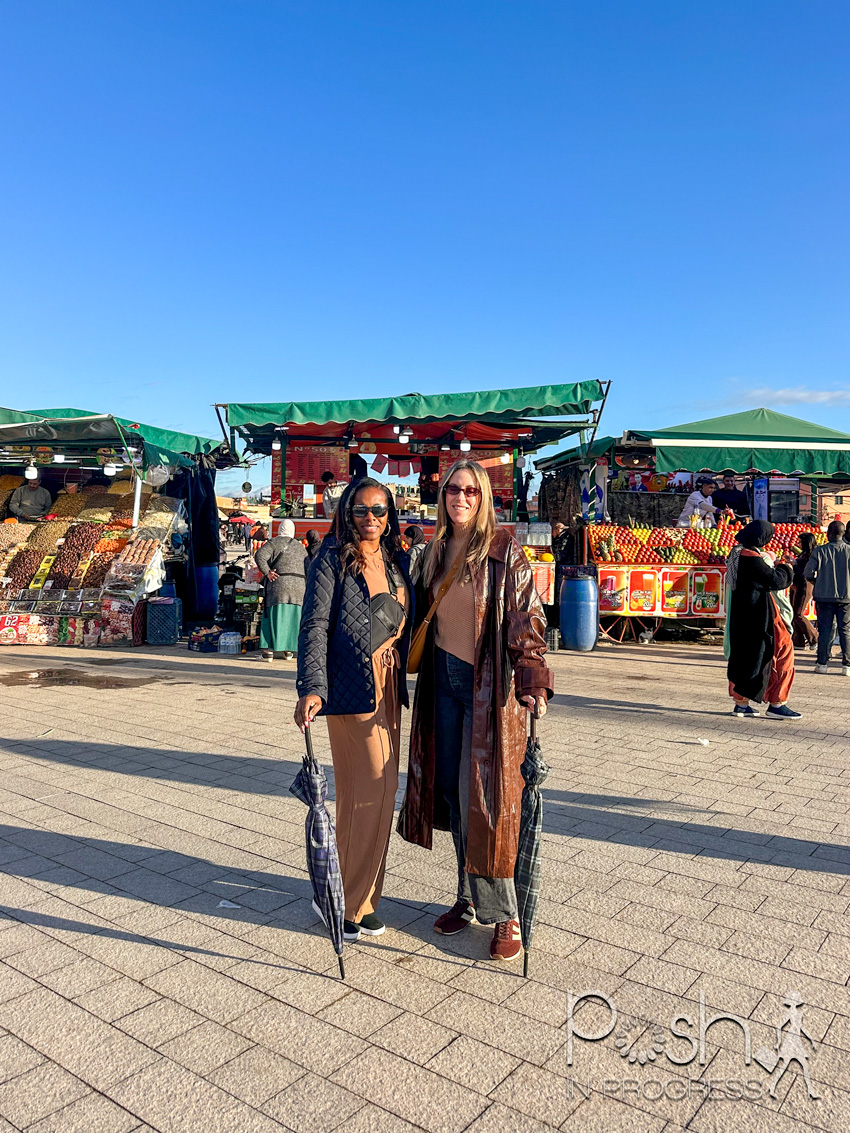
Jemaa el-Fnaa is Marrakesh’s most famous square and one of its most dynamic spaces. During the day, it feels relatively open and calm, but as the sun begins to set, the entire atmosphere shifts. Food stalls appear quickly, grills start smoking, musicians gather, and performers draw crowds. The square becomes a living performance, full of sound, movement, and energy. Locals meet friends, families sit down for dinner, and travelers try to take it all in at once. There were several performers while we were there, including a comedian (if only I spoke Arabic!), and snake charmers. While I was filming some content, I almost stepped on a cobra! If you do want to film any of the performers, you will need to be prepared to tip them.
Because the energy can feel intense, one of the best ways to experience Jemaa el-Fnaa is from a rooftop restaurant or café overlooking the square. From above, you can observe the transformation without being pulled directly into the chaos. Watching the square come alive from a rooftop before heading down, even briefly, felt like the right balance for me. We also lucked into a really gorgeous sunset, as it had been raining right before we arrived, so the clouds lit up so beautifully.
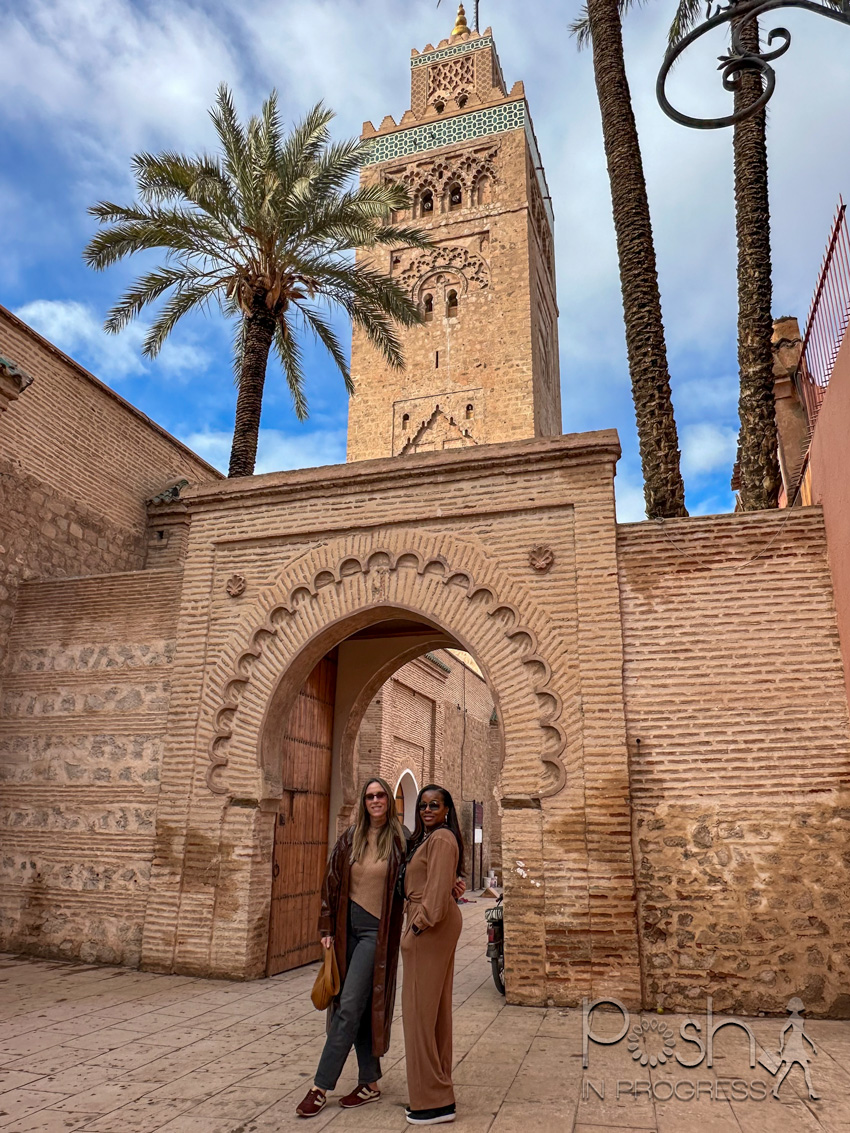
A Moment of Stillness at the Koutoubia Mosque
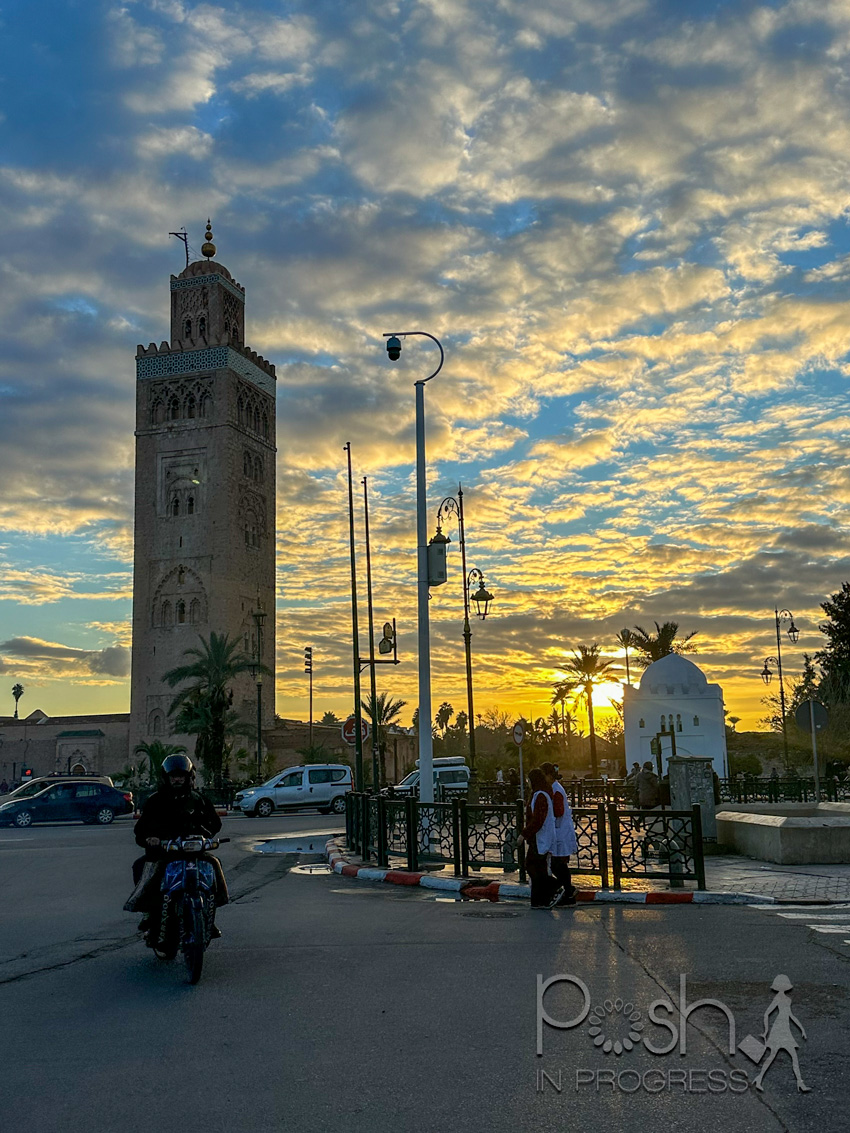
Koutoubia Mosque sits just a short walk from the chaos of Jemaa el-Fnaa, yet it feels like an entirely different world. After the noise, movement, and sensory overload of the square, arriving here felt grounding. This is the oldest and most iconic mosque in Marrakesh, dating back to the 12th century, and its soaring minaret is the city’s most recognizable landmark. No matter where you are in Marrakesh, you are often orienting yourself around Koutoubia without even realizing it.
While non-Muslims are not permitted inside, simply being outside the mosque is a meaningful experience. The surrounding gardens offer space to slow down, take a breath, and absorb the spiritual rhythm of the city. We arrived in the late afternoon, just as the light softened and the call to prayer echoed across the Medina. In that moment, Marrakesh felt less like a maze and more like a living, breathing place with centuries of history layered into everyday life.
What struck me most was the contrast. Just minutes earlier, we were navigating crowds, snake charmers, and food stalls. Standing near Koutoubia, everything felt calmer and more expansive. Locals passed through the gardens, couples sat quietly on benches, and the mosque stood as a steady reminder that Marrakesh is not just a destination, but a deeply spiritual city shaped by tradition and time.
If you are visiting Jemaa el-Fnaa, make time to walk here afterward. Seeing the Koutoubia Mosque is not about checking off a landmark. It is about experiencing one of the few places in Marrakesh where the energy shifts and you can truly pause and reflect.
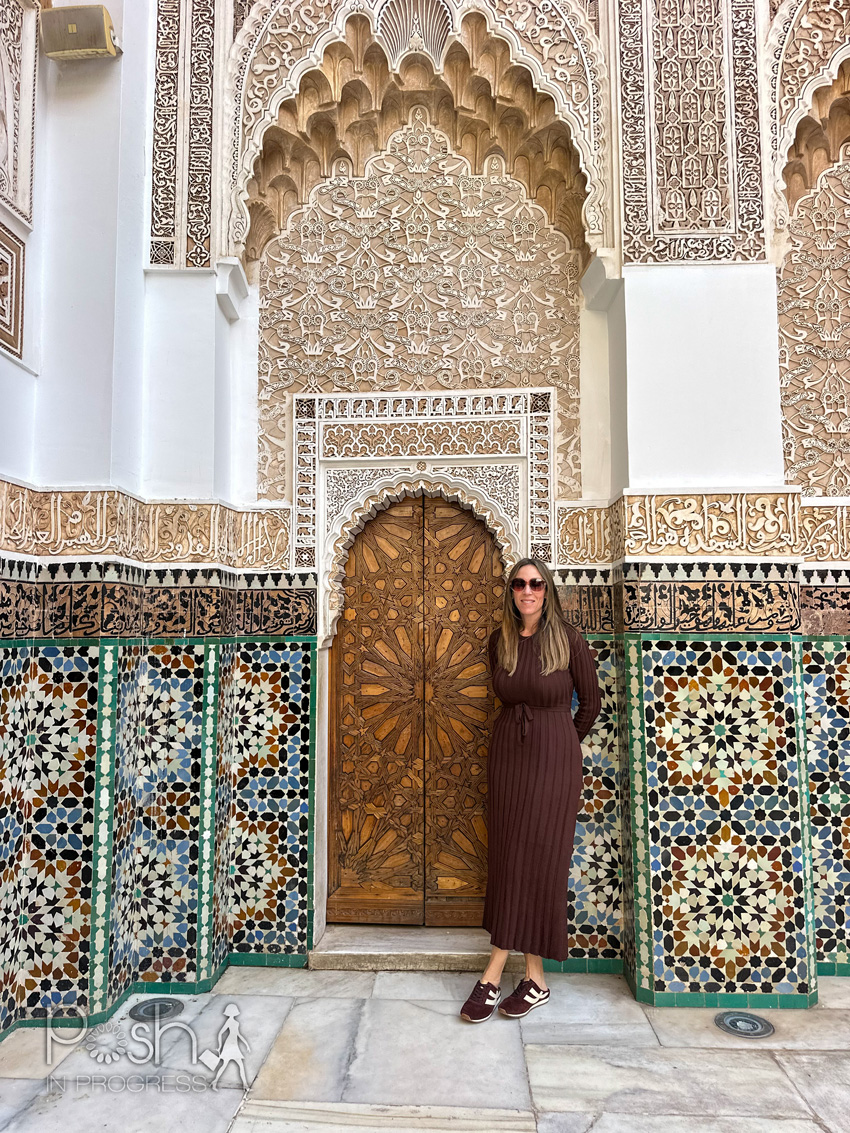
Visiting the Ben Youssef Madrasa
The Ben Youssef Madrasa is one of the most impressive historical sites in Marrakesh and one of the places that truly stopped me in my tracks. Once the largest Islamic school in North Africa, it dates back to the 14th century and served as a center of learning for students studying theology, law, and science.
Walking through the madrasa feels very different from navigating the souks. The space opens into a large courtyard surrounded by intricate tilework, carved cedar wood, and detailed stucco. Every surface is intentional, and the symmetry creates a sense of calm that contrasts sharply with the energy outside. The student rooms surrounding the courtyard are small and simple, which makes the grandeur of the central space even more striking. Standing there, it is easy to imagine how meaningful this place once was, not just architecturally, but intellectually and spiritually. This is a must-visit if you are interested in history, architecture, or photography. This was honestly such a gorgeous place and I’m so glad we spent some time here.
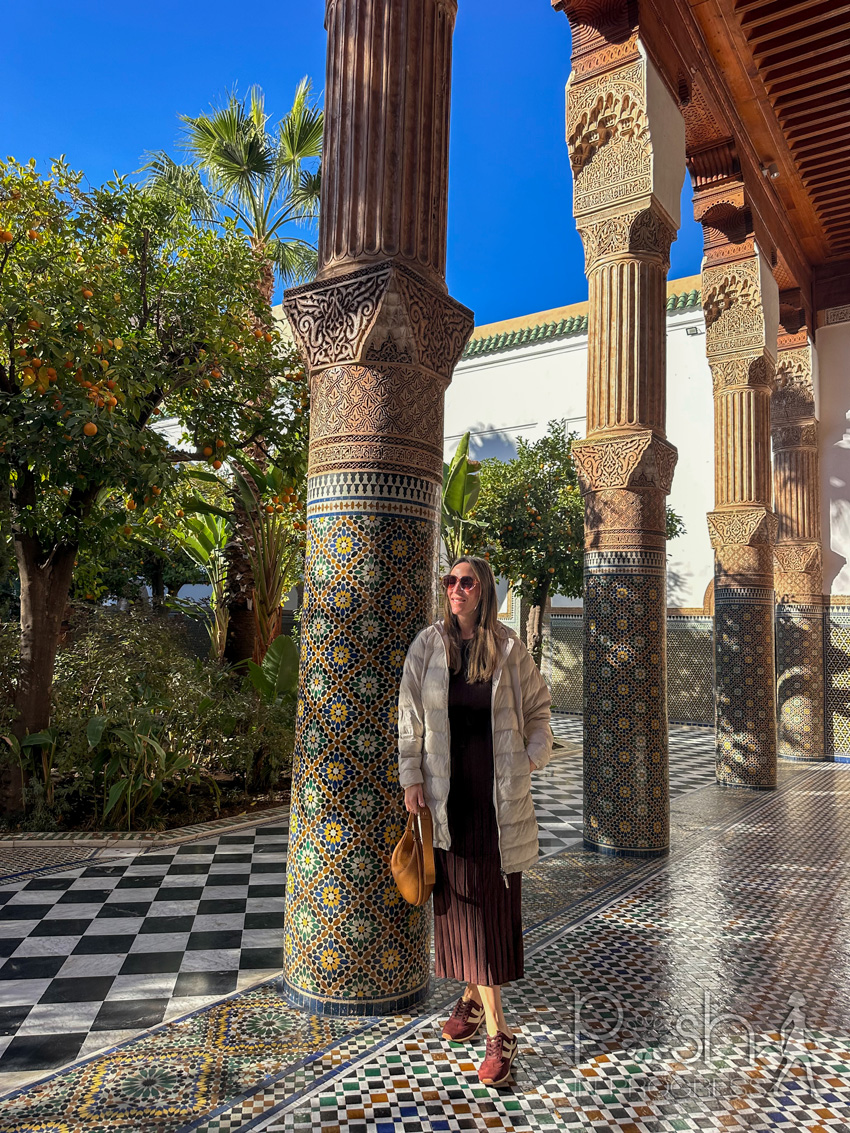
Dar el Bacha and Coffee at Bacha Coffee
Visiting Dar el Bacha and stopping for coffee at Bacha Coffee was one of my favorite experiences in Marrakesh and a moment I still think about. Dar el Bacha was once the palace of the Pasha of Marrakesh and is now home to the Museum of Confluences. The building itself is elegant and beautifully restored, with tiled floors, carved details, and peaceful courtyards that feel worlds away from the busy streets outside. The museum offers insight into Morocco’s cultural intersections, but even if you do not explore every exhibit, the space alone is worth visiting.
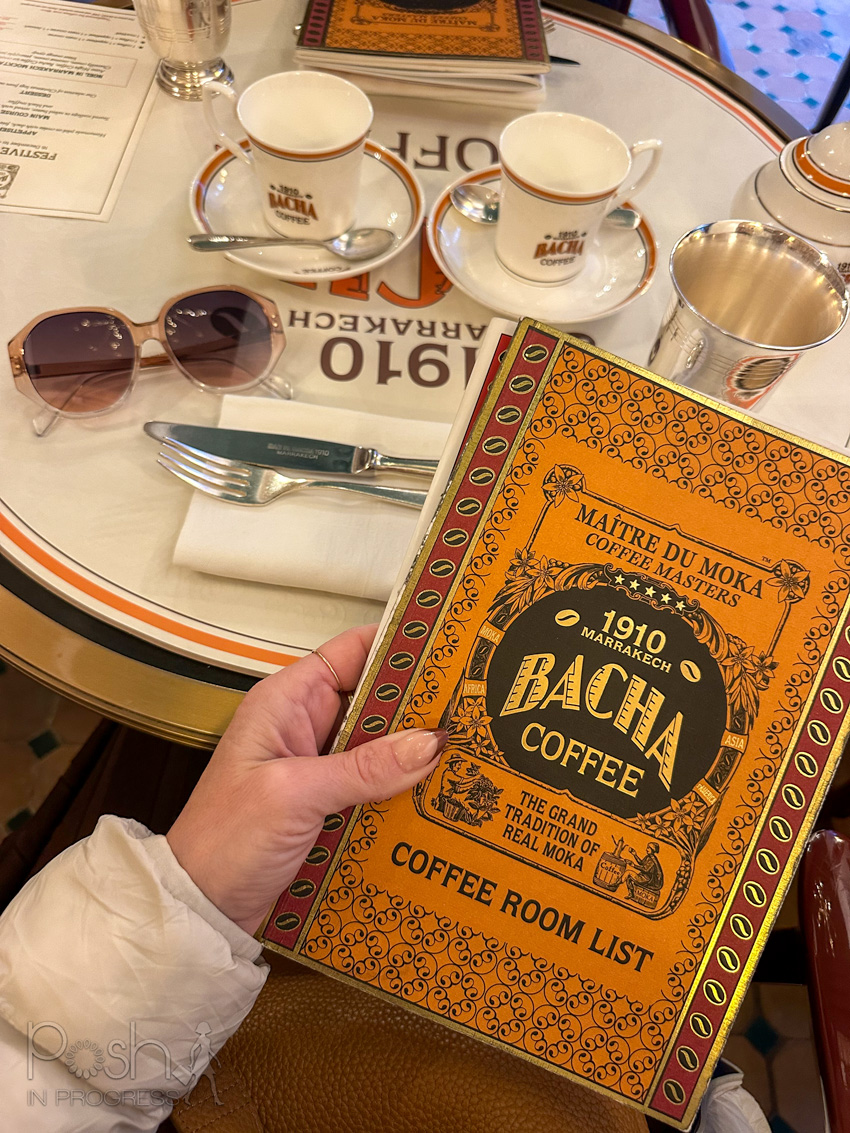
Bacha Coffee
Inside Dar el Bacha, you will find Bacha Coffee, which feels like stepping into a different era. The interior is bright and refined, with white walls, brass accents, and shelves lined with beautifully packaged coffee from around the world. The menu is extensive, offering hundreds of coffee options sourced globally.
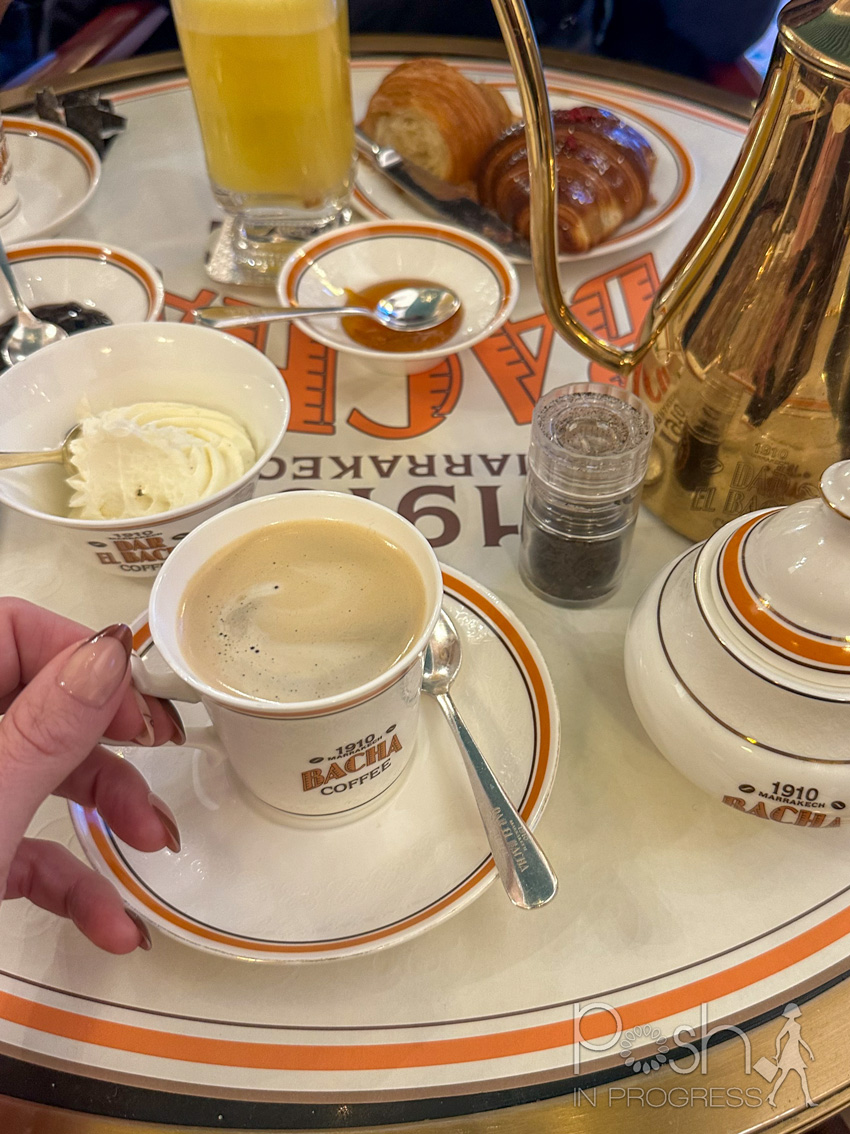
Sitting down for coffee here felt like a pause in the middle of a very stimulating trip. It is not a quick coffee stop. It is an experience meant to be enjoyed slowly. After days of navigating busy streets and excursions, this moment felt grounding and indulgent in the best way. Be prepared for a wait! Normally, the wait can range from one to three hours. We were lucky to arrive very early when Dar el Bacha first opened, so we only had to wait about 30 minutes.</p>
We loved our time at Bacha so much, we actually wanted to go back another day, but the wait was too long. However, we were pretty excited to see that the Marrakesh airport had a Bacha store, so we bought a few more souvenirs before we returned to the U.S.
Visiting the YSL Gardens and Jardin Majorelle
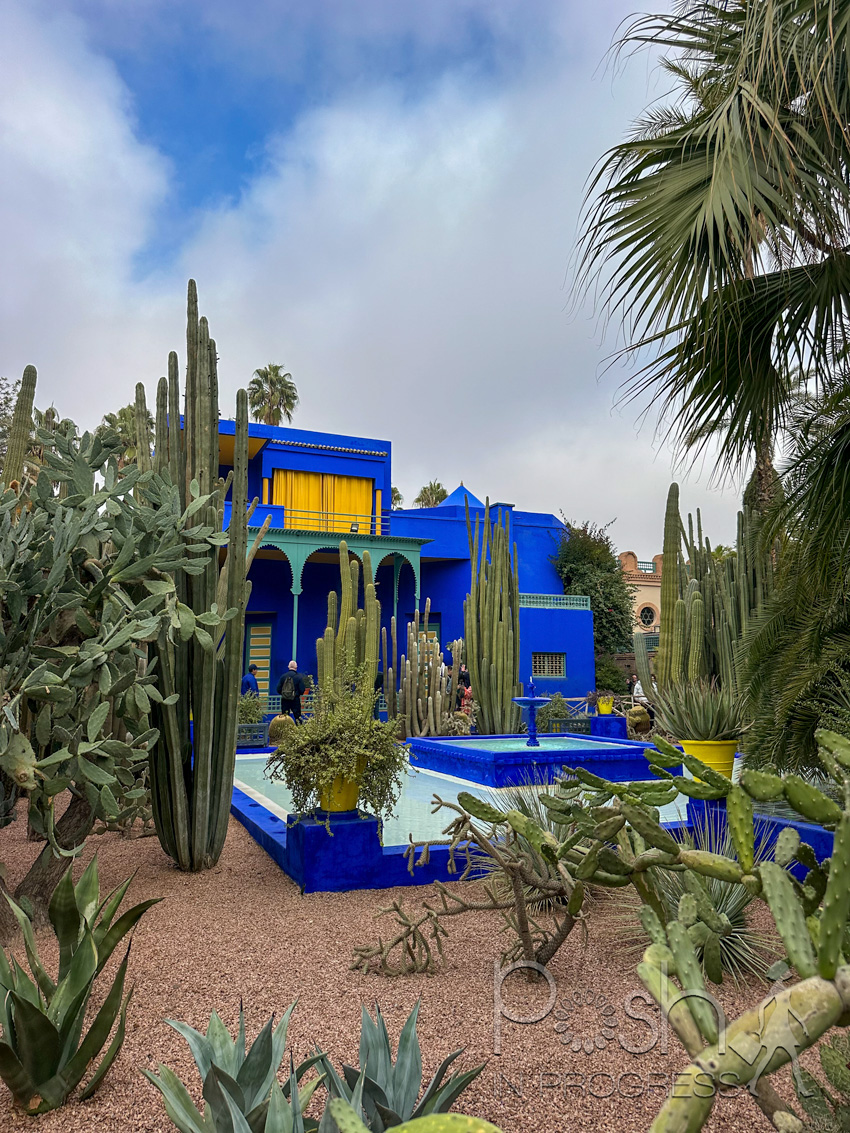
The Jardin Majorelle, often referred to as the YSL Gardens, was one of the most peaceful experiences of the trip. Created by French artist Jacques Majorelle and later restored by Yves Saint Laurent, the gardens feel intentionally designed to calm the senses.
The vibrant blue buildings contrast beautifully with the lush greenery and reflective pools. Walking through the gardens feels slow and intentional, which was a welcome change after the intensity of the medina. It is one of the few places in Marrakesh where you can truly pause. It also reminded me so much of Arizona. Actually, all of the places I experienced in Marrakesh and Morocco reminded me a lot of the topography of Arizona.
If you have additional time, you can also visit the YSL Museum. The nearby Yves Saint Laurent Museum adds depth to the visit, offering insight into the designer’s creative process and his deep connection to Morocco. Even if fashion is not your primary interest, the space is thoughtfully curated and worth your time. The YSL gardens also had some artwork, which you can check out.
Another highlight from the visit to the gardens was spending time having a tea at their cafe. We ordered the fancy tea (I can’t remember the exact name), but it came with mint tea, an array of Moroccan pastries, and a scoop of ice cream (which had the most unique flavor and I was told was a Moroccan spice I can’t recall the name of).
Sunrise Hot Air Balloon Ride Over Marrakesh
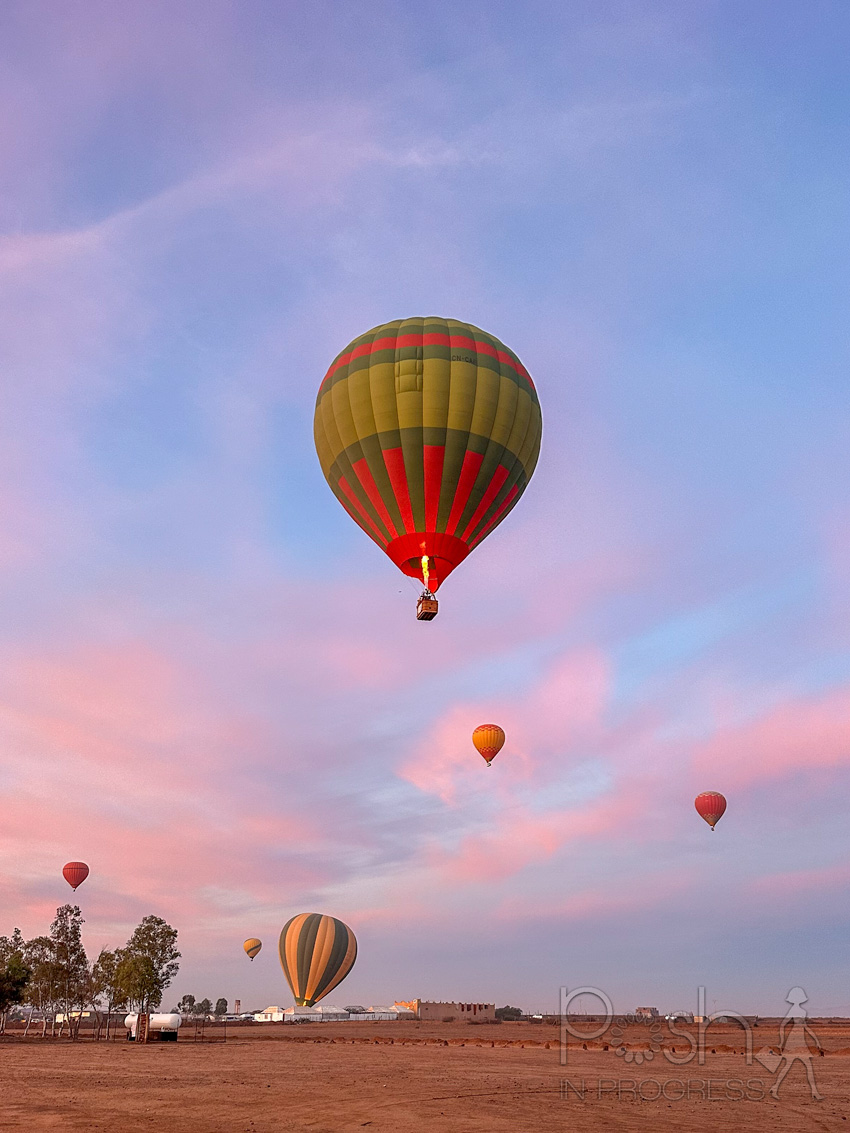
The sunrise hot air balloon ride was the highlight of the entire trip for me. The experience begins very early, with pickup well before sunrise. The drive out of the city was quiet and took just under an hour to get there. We visited in December, so sunrise wasn’t until after 8 am, so our pick-up time was 6:30 am.
It was so fun to watch the nearby balloons get blown up and then it was time for us to climb in. Floating above the desert with the Atlas Mountains in the distance is peaceful in a way that is difficult to describe. The stillness, the changing light, and the wide open views felt grounding and surreal at the same time. The sunrise that morning was beyond striking and our guides offered an added touch by having a drone up there with us. We ended up getting really cool drone footage for an additional purchase (but so worth it).
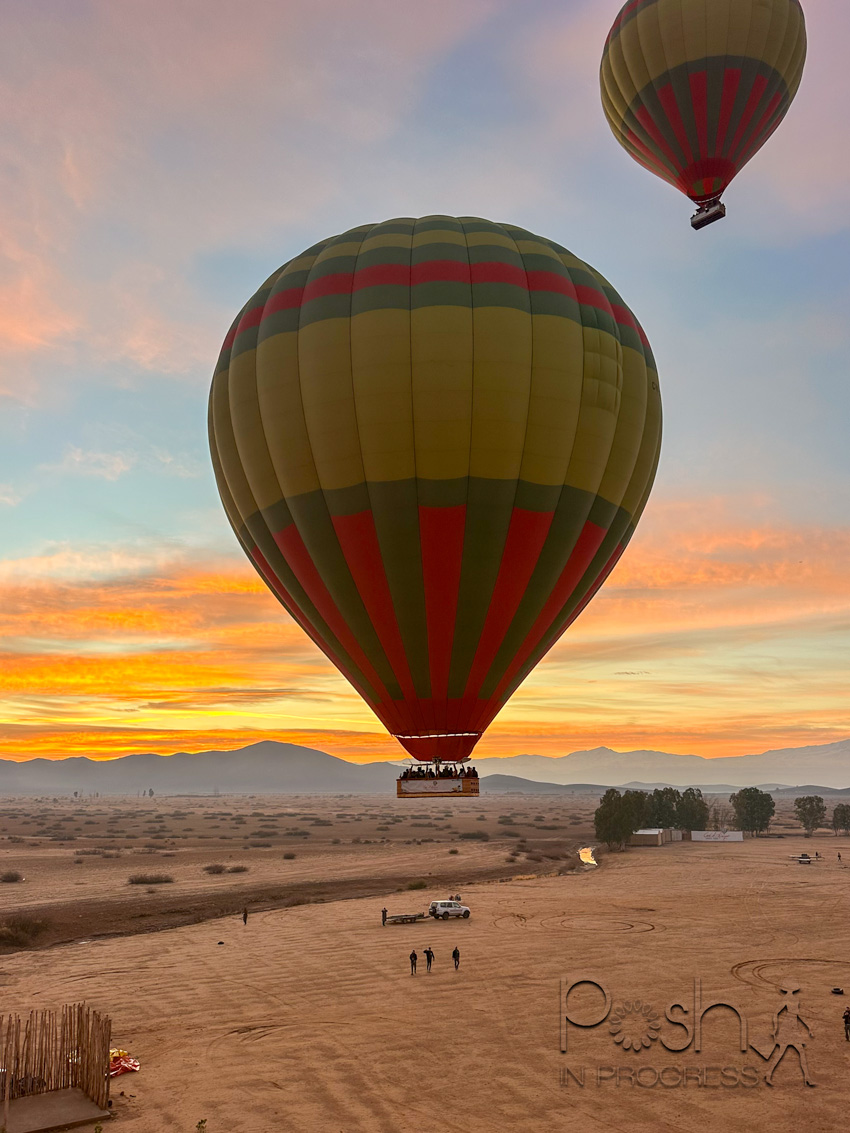
Most hot air balloon experiences include breakfast afterward, often served in a traditional Berber setting. We actually didn’t know we were getting breakfast, but it was a nice final touch to the morning. If you choose only one excursion outside the city, this is the one I would recommend without hesitation.
Day Trip to the Atlas Mountains
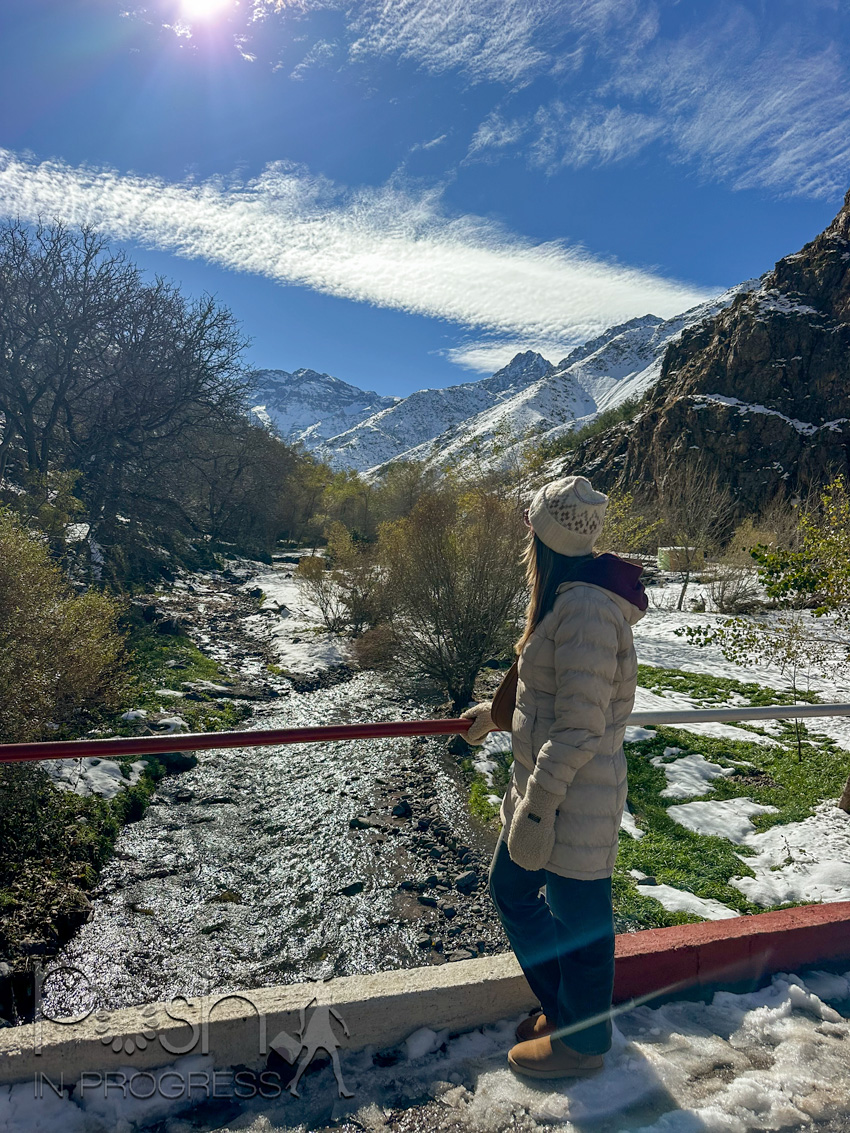
A day trip to the Atlas Mountains offers a completely different perspective of Morocco. The drive itself is really scenic, with landscapes shifting quickly from city streets to wide valleys and winding mountain roads. The hills are made of red rock, which once again, reminded me of Arizona.
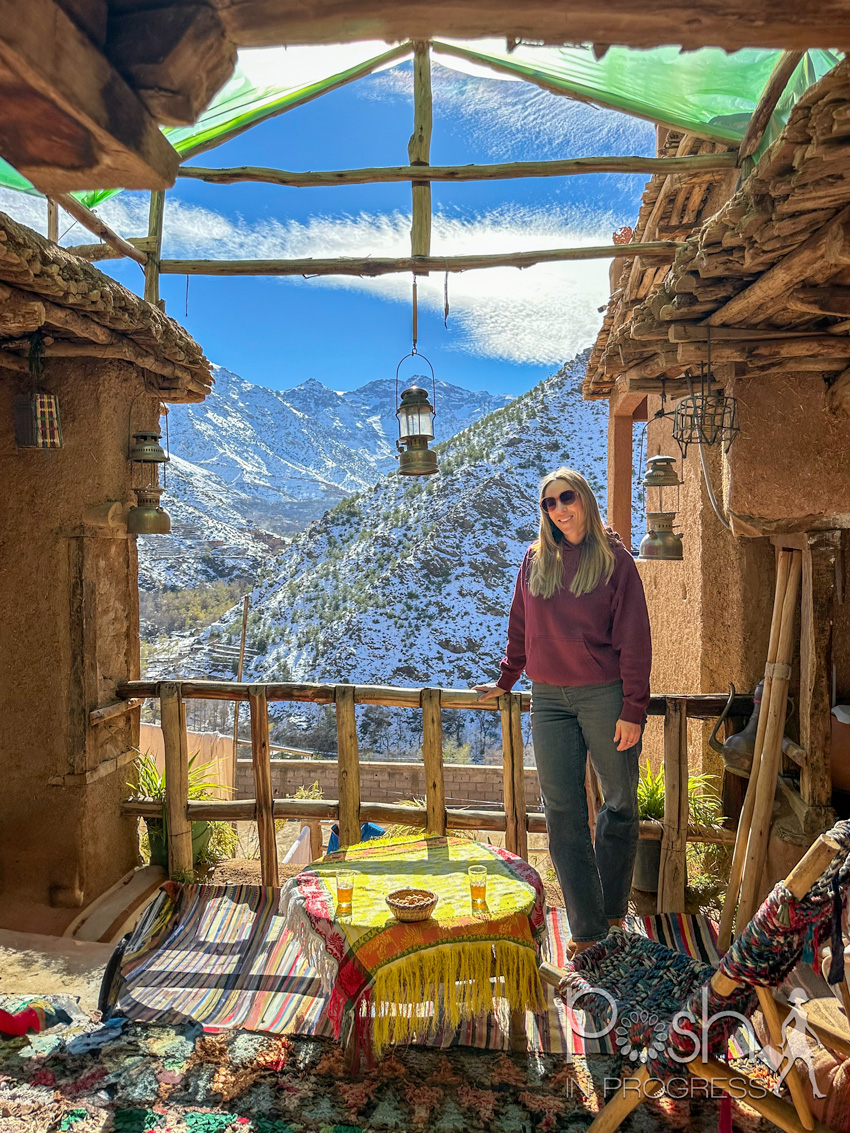
Many tours include visits to small Berber villages, where daily life feels slower and more rooted in tradition. You might see families baking bread, children walking to school, or farmers tending to small plots of land. These moments offered a glimpse into life beyond Marrakesh. We were going to go on a hike, but the mountain street was closed because it was so busy so we were not able to go the entire way we had planned. Nonetheless, we still saw striking views of the Atlas mountains, and we did stop in a local village to check out their market. It was a really interesting experience because their market had everything from fresh produce, to knock-off clothing.
Lunch is often served with sweeping mountain views, sometimes in a local home or small restaurant. We had lunch in a place called the Berber family lodge. It was an unassuming hotel where hikers like to stay. The grandmother made us a traditional Moroccan meal and the views of the mountains were beyond gorgeous.
A Stop at Richard Branson’s Atlas Mountains Retreat
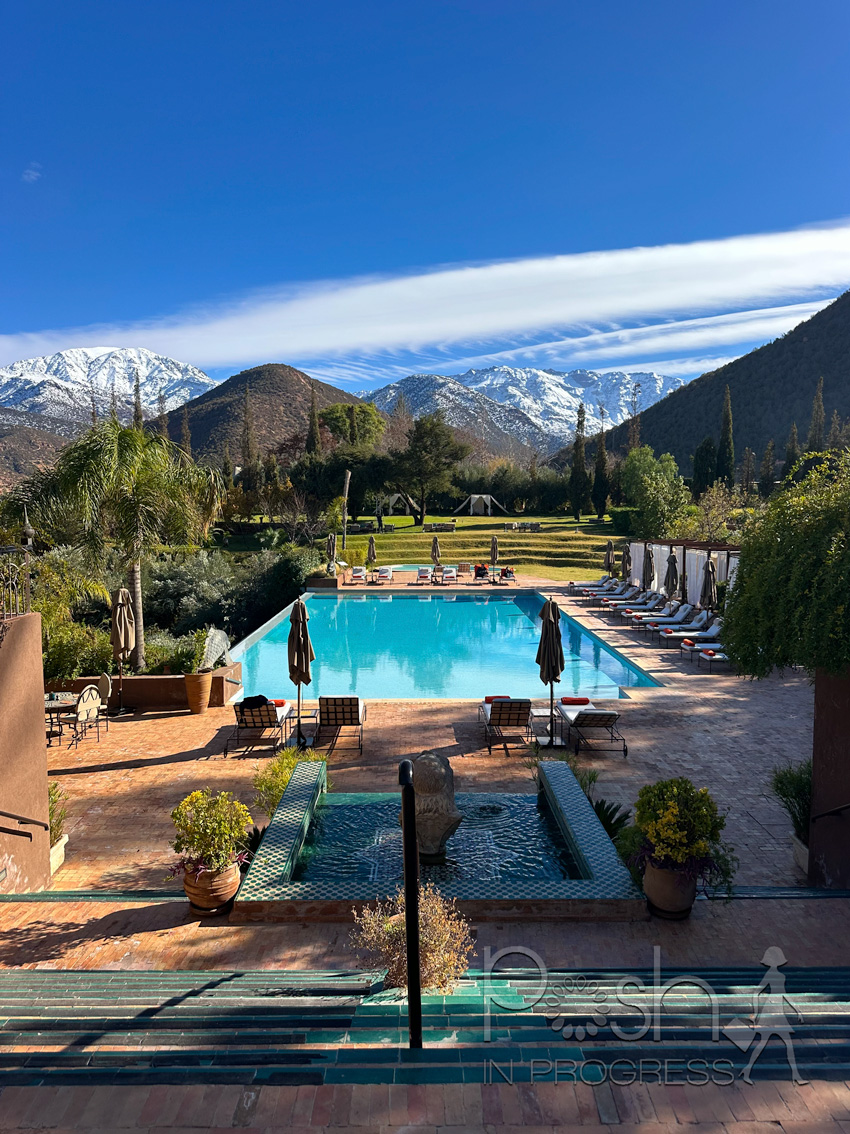
One of the most unexpected and memorable parts of our day in the Atlas Mountains was stopping at Kasbah Tamadot, Richard Branson’s breathtaking retreat tucked into the foothills. The contrast between the rugged mountain landscape and the elegance of the property is striking in the best way.
Originally a traditional kasbah, the property has been transformed into a luxurious, serene escape that still feels deeply rooted in Moroccan design. From the moment we arrived, it felt calm, intimate, and incredibly special. Terraces spill out toward sweeping mountain views, colorful tiles and carved details reflect local craftsmanship, and every corner feels thoughtfully designed without being overdone.
Even if you are not staying overnight, visiting Kasbah Tamadot is worth it if your itinerary allows. Sitting on the terrace, sipping mint tea, and taking in the panoramic views of the Atlas Mountains was one of those travel moments where time seem to slow down. It felt worlds away from Marrakesh, yet still very much connected to the culture and landscape of Morocco.
What made the stop especially memorable was how peaceful it felt. After winding roads, small villages, and the dramatic terrain of the Atlas Mountains, Kasbah Tamadot offered a moment of quiet luxury and reflection. It was easily one of the most beautiful places we saw during our trip and a reminder that Morocco does luxury in a way that feels soulful rather than flashy.</p>
If you are planning a day trip to the Atlas Mountains, I would absolutely recommend asking your guide to include a stop here. Even a short visit adds a layer of magic to the experience and gives you a glimpse into a side of Morocco that feels both indulgent and authentic.
Agafay Desert Camel Ride and ATV Experience
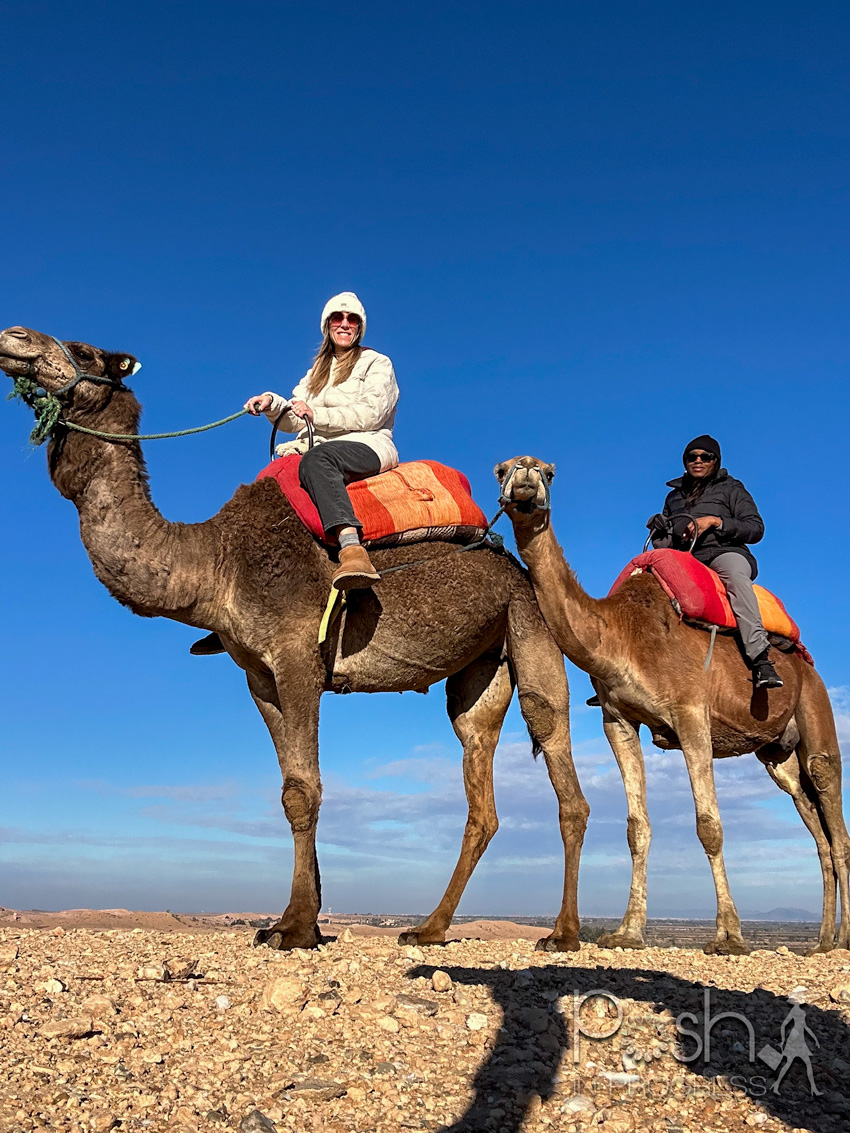
The Agafay Desert was one of the most memorable parts of the trip for me. Located just about an hour outside of Marrakesh, it offers a desert experience without the long journey required to reach the Sahara. The landscape is rocky and expansive, with soft earth tones and wide open views stretching toward the Atlas Mountains.
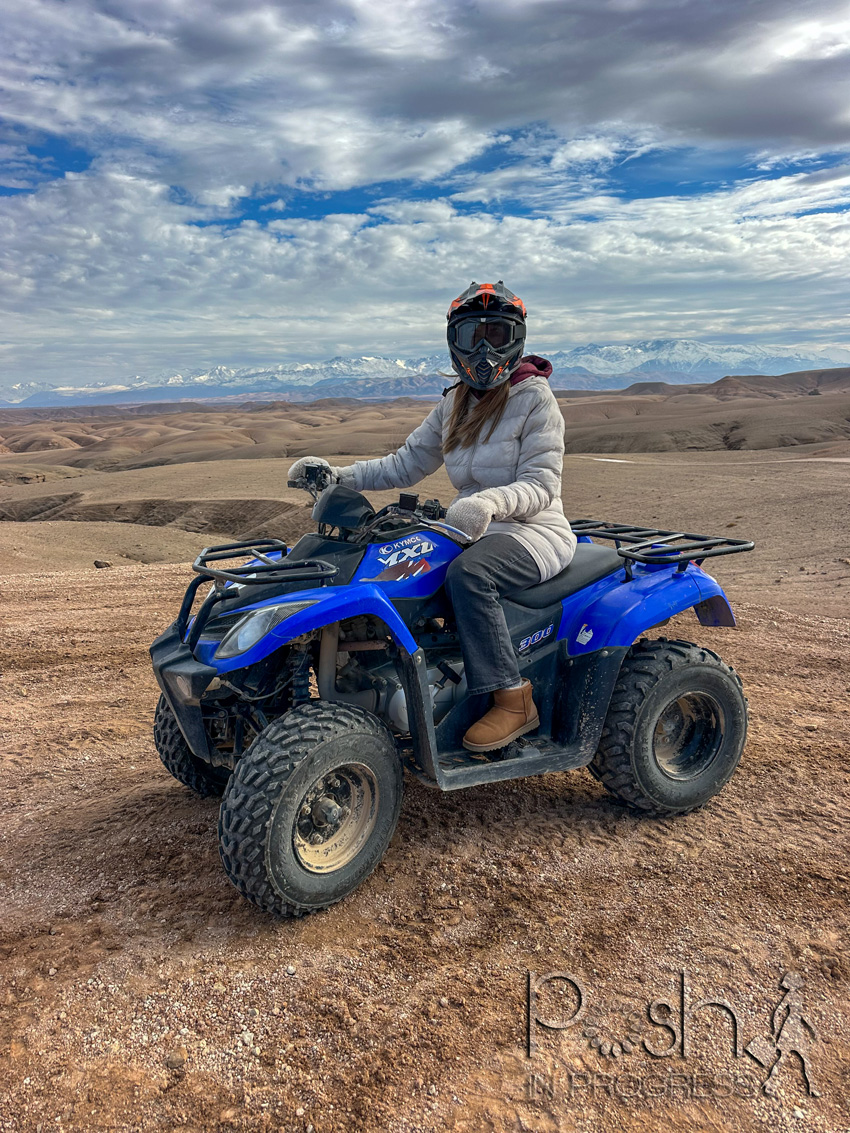
First, we started with an ATV ride. Riding across the desert terrain on an ATV was exhilarating and fun. Next, we had a camel ride, which felt calm and almost meditative. Moving slowly through the desert allows you to take in the scale of the landscape and the quiet that comes with it. The contrast between the peaceful camel ride and the adrenaline of the ATVs made the day feel balanced and dynamic. This is one of the best day trips from Marrakesh if you want adventure without a long travel commitment.
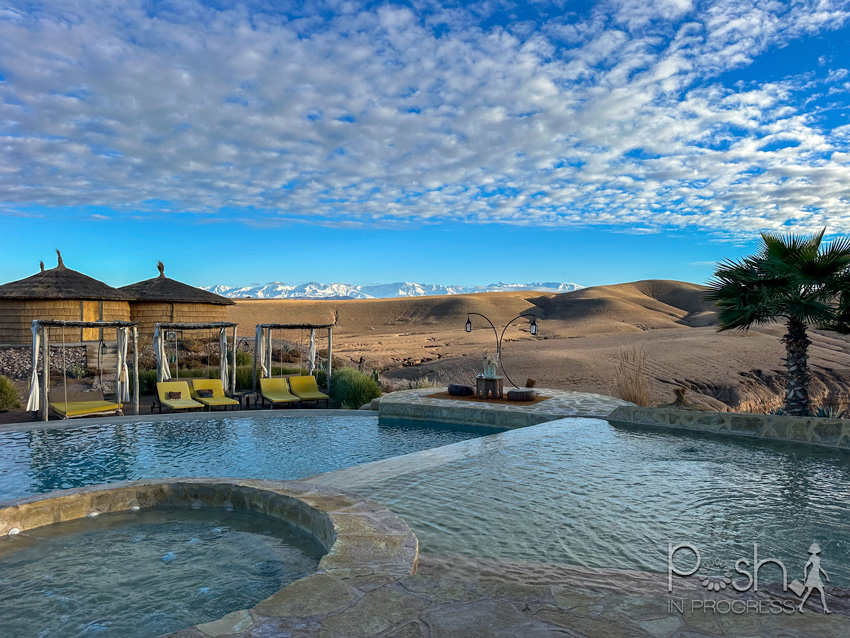
Staying Overnight at an Agafay Desert Camp
Many travelers choose to extend their Agafay experience by staying overnight at one of the desert camps. These range from simple accommodations to full luxury camps with private tents, comfortable beds, and thoughtful design details.
An overnight stay offers a sense of stillness that is hard to find elsewhere. Evenings are typically spent enjoying dinner under the stars, often by candlelight, followed by quiet conversation around a fire. With minimal light pollution, the night sky feels expansive and grounding. Waking up in the desert is equally special. The mornings are quiet, the light is soft, and the pace feels intentionally slow. Even one night in an Agafay desert camp adds depth and contrast to a Marrakesh itinerary.
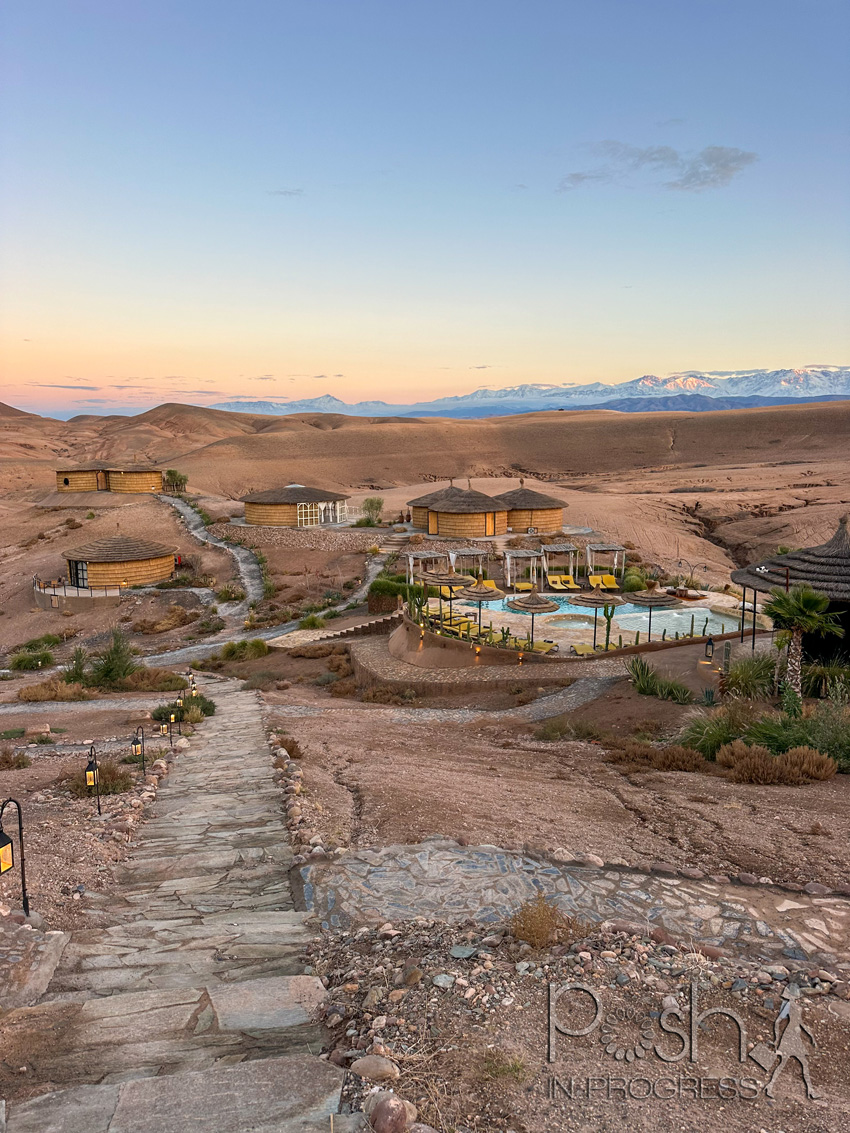
We visited Be Agafay, which was a next-level luxury glamping experience. Honestly, it was more resort than glamping, in my opinion. We came here a few hours before sunset. I enjoyed walking around the grounds, checked out the pool and bar area, enjoyed some tea near the fire, and then enjoyed dinner here after sunset. We also stayed to watch live performances after dinner. It was a wonderful experience, and if you have an interest in visiting an elevated Agafay camp experience, this is one you’d definitely enjoy.
Where to Stay in Marrakesh: Hotel Versus Riad
Choosing where to stay in Marrakesh is one of the most important decisions you will make. Riads inside the medina are beautiful and historic, often featuring tiled courtyards, fountains, and intimate spaces that feel deeply traditional.
For this trip, however, I chose to stay at Le Méridien Marrakech, and I am genuinely glad I did. While I loved visiting the medina, I would have found it overwhelming to stay in full-time. The crowds, noise, and tight spaces can be a lot, especially after long days of sightseeing.
Le Méridien offered space, open grounds, and a calmer atmosphere. Having room to decompress at the end of the day made the entire trip more enjoyable for me. I was also upgraded to a king suite, so it felt luxurious, spacious, and very comfortable. If you value quiet, space, and the ability to step away from stimulation, a resort-style hotel can be a much better fit than a riad.
What to Eat in Marrakesh
Food is a central part of the Marrakesh experience and reflects the city’s layered culture. Tagine is the most iconic dish. It comes in countless variations, often slow-cooked with vegetables, meat, dried fruit, and warming spices. Each version tastes slightly different depending on where you try it. Pastilla offers a sweet and savory combination that is uniquely Moroccan and worth trying at least once.
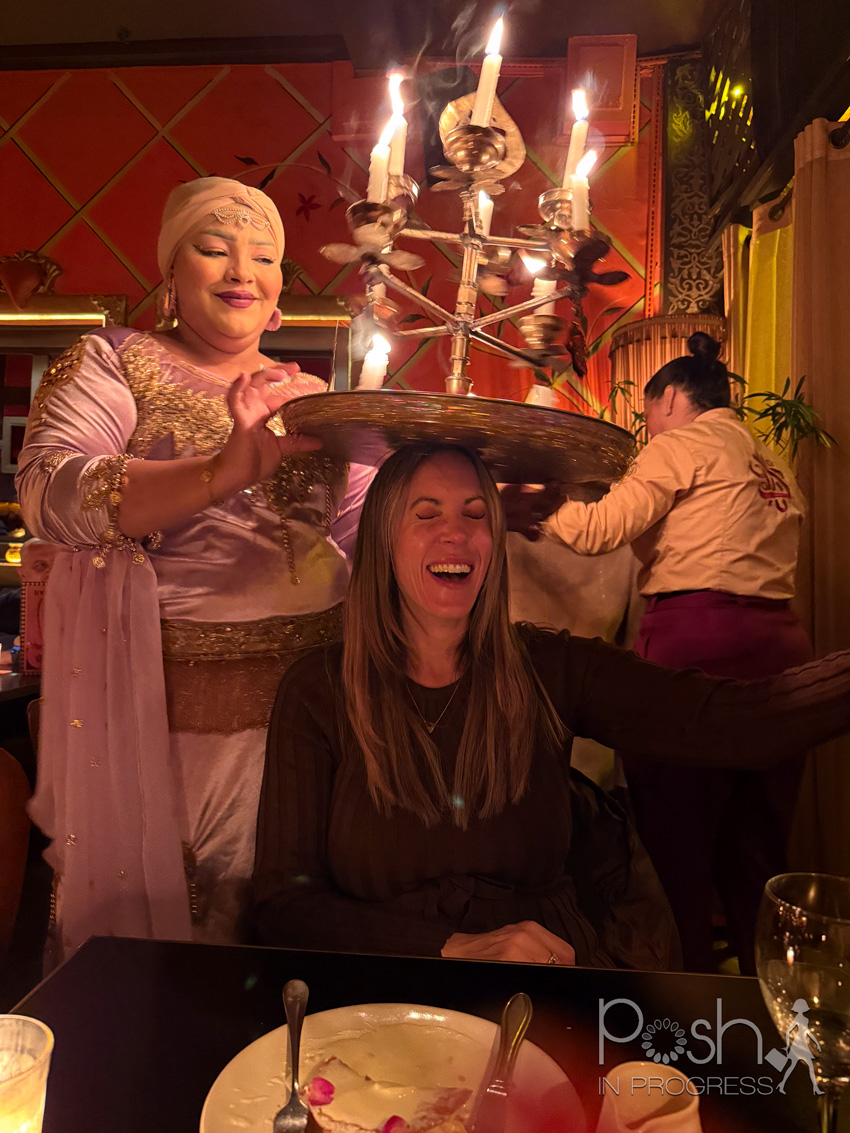
They serve mint tea everywhere and it is a symbol of hospitality. If street food feels intimidating, hotel restaurants, rooftop dining spots, and guided food experiences are great ways to explore Moroccan flavors in a comfortable setting. Our favorite restaurant was called Comptoir Darna. We had the lamb shoulder, and it was, by far, the best meal we had in Marrakesh. I’d highly recommend this restaurant. The food was delicious, the decor was gorgeous, and the entertainment was…interesting. I don’t want to spoil it for you!
What to Pack and How to Dress in Marrakesh
While Marrakesh is used to tourists, Morocco is still a conservative country, and dressing with modesty and cultural awareness goes a long way. Modesty is especially important in the medina, religious sites, and more traditional neighborhoods.
For women, this generally means covering shoulders, avoiding low necklines, and choosing longer hemlines. Loose-fitting clothing is both more respectful and far more comfortable in the heat. Flowy dresses, wide leg pants, lightweight tops, and midi or maxi skirts worked best if you visit in the summer or warmer months. In the winter, it’s actually quite cold. We visited in December, so we needed winter coats and even hats and mittens for our desert and mountain excursions.
A lightweight scarf is also a great option if you visit in the summer or warmer months. You can use it for extra coverage, sun protection, warmth in the early morning, and even dust in the desert. Comfortable walking shoes are also critical, as you will be walking on uneven surfaces throughout the city or if you go for the excursions into the desert or mountains.
Best Time to Go to Marrakesh
The best time to go to Marrakesh is spring and fall, when temperatures are warm but manageable. Summer can be extremely hot, while winter is cooler but still pleasant for sightseeing and excursions. We visited in December. It was a decent time to visit because there weren’t many crowds and prices are reasonable. However, it was colder than I expected. The daytime temperatures were just around 60 degrees F during the day and in the 40s at night. I am grateful I brought a puffer jacket that is very packable. I ended up wearing that for the majority of the trip.
Final Thoughts on Marrakesh
Marrakesh is intense, beautiful, and deeply memorable. From floating above the desert in a hot air balloon to riding camels in the Agafay and sitting for coffee at Dar el Bacha, the experiences feel layered and meaningful. Honestly, there were moments I didn’t love. I quickly felt overwhelmed and claustrophobic within the walls of the medina. But there were other moments, like drinking tea at the YSL gardens or seeing the views of the Atlas mountains, that I won’t soon forget. It is a destination that rewards thoughtful travel and one I am very glad we chose it on a whim.
This was only my second time on the African continent. I first visited South Africa in 2016. You can read about that here.

This site uses selective affiliate links, which means a commission is earned if you make a purchase via the link. The price you pay will be the same whether you use the affiliate link or go directly to the vendor’s website using a non-affiliate link.
Our editorial content is not influenced by advertisers or affiliate partnerships. We appreciate, and thank you for, your support!